

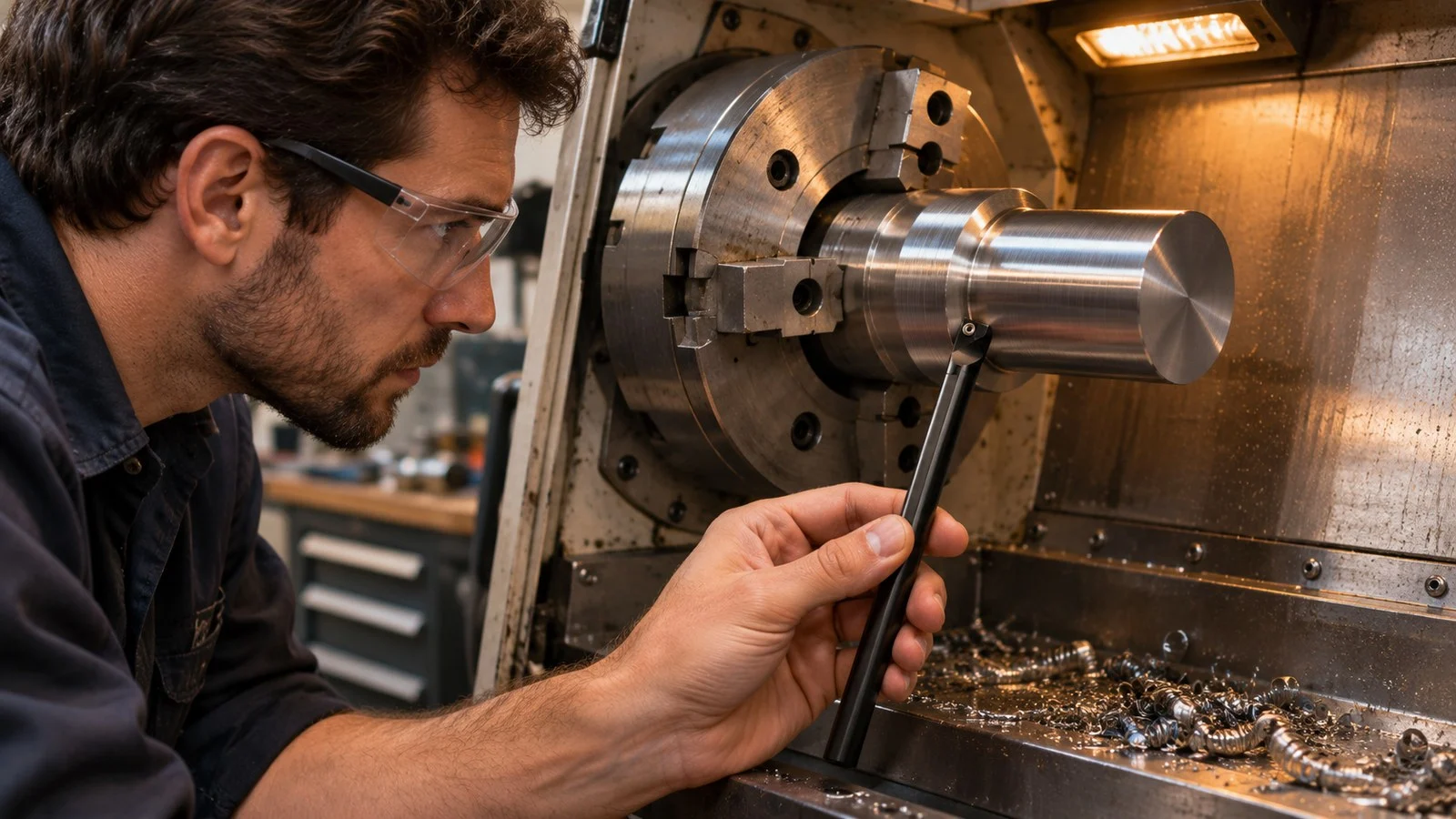
A larger turning insert nose radius can produce a finer surface texture at the same feed and provide a stronger cutting corner. A smaller radius can suit shallow cuts and reduce radial force in some setups, but it may need a lower feed to achieve the same finish.
How Nose Radius Affects Surface Finish
Turning insert nose radius and feed rate work together to shape the feed marks left on a surface. At a comparable feed, a larger radius can reduce the theoretical height of those marks. A smaller radius can reach a similar finish, but generally needs a lower feed.
That doesn’t mean the largest radius will always produce the best measured finish. Cutting geometry, workpiece material, tool wear and chatter also affect the surface. If a larger radius increases deflection or vibration in your setup, the result may be worse despite its theoretical advantage.
| Selection | Potential Benefit | Trade-Off |
|---|---|---|
| Smaller nose radius | Can suit shallow cuts and reduce radial force | May need a lower feed for the desired finish; narrower edge can be less strong |
| Larger nose radius | Can reduce theoretical feed marks and strengthen the corner | May increase radial load and deflection |
Nose Radius and Cutting Force
A larger nose radius can increase the radial cutting force acting on the workpiece. That matters when the part or setup is prone to deflection: a radius that looks attractive for finish may make the cut less stable.
A smaller radius can lower radial force in some setups and may help reduce deflection-related chatter when the feed is appropriate. It isn’t a universal cure for vibration. Cutting engagement, insert geometry, material and setup rigidity also affect the result.
Cutting Depth and Edge Strength
A smaller nose radius is often a better starting point for a shallow cut, provided the feed suits the insert. Its narrower cutting edge can be more vulnerable to wear or breakage if the material or cutting conditions aren’t well matched.
A larger radius provides a stronger corner and can support higher feeds or deeper cuts when the tool and workpiece allow them. Check the insert and tool requirements before increasing either setting; the radius alone doesn’t determine a suitable cutting depth.
Choosing a Nose Radius for Your Cut
Start with the constraint that matters most. If the setup is stable and surface texture limits the feed you can use, consider a larger radius. If radial deflection is a concern or the cut is shallow, consider a smaller radius and allow for the lower feed that may be needed to meet the finish requirement.
When comparing options, keep the rest of the setup as consistent as practical and measure the resulting surface. You can review our machining category as you assess the turning system, then select the insert using the tool, machine and part requirements.
FAQ
Does a Smaller Nose Radius Improve Finish?
Not automatically. At the same comparable feed, a larger radius can leave finer theoretical feed marks. A smaller radius may produce a better actual surface if it helps reduce deflection-related chatter in a particular setup.
Can Nose Radius Affect Chatter?
Yes. A larger radius can increase radial force, while a smaller radius may reduce deflection in some setups. Chatter also depends on cutting conditions and rigidity, so changing radius alone may not solve it.
Is a Larger Nose Radius Stronger?
A larger radius can provide a stronger cutting corner and may suit higher feed or cutting depth. The insert, workpiece material and setup must also be suitable for those conditions.