

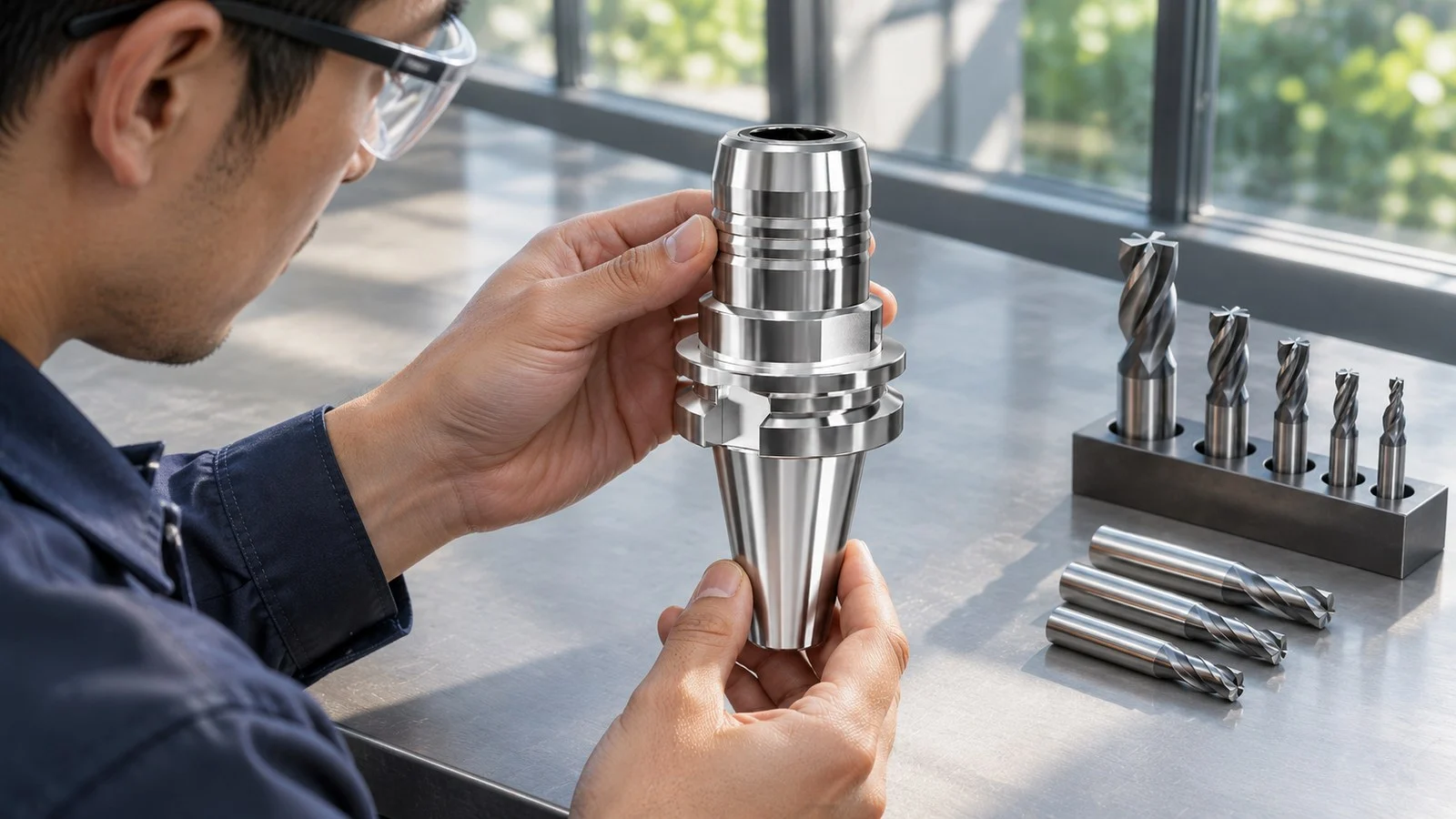
In a BT vs CAT tool holder decision, choose the interface specified for your machine: BT for a machine approved for BT tooling, and CAT for one approved for CAT tooling. Both use a 7/24 taper form, but that shared form alone doesn’t make the holders interchangeable.
BT vs CAT Tool Holder Differences
BT and CAT holders differ at the spindle-side interface, especially in flange design and retention-knob threads. BT uses metric threads, while CAT threads are typically inch-based. The flange must also suit the machine’s tool changer, so matching the taper form alone isn’t enough to select a holder.
| Feature | BT | CAT |
|---|---|---|
| Taper form | 7/24 | 7/24 |
| Standard designation | JIS B6339 | CAT is often called CV and is described under ANSI B5.50 |
| Flange | Wider than the CV flange in Kennametal’s comparison | Different flange dimensions from BT |
| Retention-knob thread | Metric | Typically inch-based; verify the actual holder |
| Machine selection | Use where the machine manufacturer approves BT | Use where the machine manufacturer approves CAT |
The standard designations above follow Kennametal’s comparison of BT and CV holders. The shared taper form describes only part of the interface; it doesn’t confirm the dimensions of a particular holder or its fit with a spindle, drawbar, pull stud, or tool changer.
BT Tool Holders
A BT tool holder has a spindle-side shank specified under JIS B6339. Its metric retention-knob thread is a useful identification feature when you’re checking tooling for a machine approved for BT.
The drawback is that a BT holder’s flange differs from a CAT flange, even though the taper form is shared. BT suits a machine whose manufacturer specifies that interface; it shouldn’t be selected for a CAT machine solely because the taper looks similar.
If your machine calls for BT tooling, our BT hydraulic chuck is one listing to review. Confirm the holder’s specifications against your machine requirements before ordering.
CAT Tool Holders
A CAT tool holder, often called a CV holder, uses the CAT/CV flange interface and typically has an inch-based retention-knob thread. It suits a machine whose manufacturer specifies CAT tooling.
The practical advantage is a match to that machine’s intended interface. The limitation is that the shared 7/24 taper form doesn’t make a CAT holder suitable for a BT tool changer. Check the actual holder thread and the machine manufacturer’s requirements rather than assuming every CAT holder has the same thread.
Choosing a BT or CAT Holder
Choose BT if:
- Your machine manufacturer specifies and approves the BT interface for the spindle and tool changer.
- The holder and the specified retention knob match the machine’s requirements.
Choose CAT if:
- Your machine manufacturer specifies and approves the CAT interface for the spindle and tool changer.
- You’ve verified the holder’s actual retention-knob thread and the specified knob.
Before ordering either type, check the holder designation and size in the machine documentation. Then verify the exact pull stud, including its geometry, against the machine manufacturer’s instructions. Use the specified retention-knob torque from the relevant supplier instructions. An incorrect pull stud can damage the spindle or holder and create a safety hazard.
For other tooling needs, you can browse our machining chuck selection once you’ve identified the required machine interface.
FAQ
Can BT and CAT Holders Be Swapped?
Don’t swap them based on the shared taper form. Use a holder only when the machine manufacturer approves its interface for the spindle and tool changer.
Do BT and CAT Use the Same Taper?
BT and CAT/CV holders share a 7/24 taper form. Their flange dimensions and retention-knob threads differ, so that similarity doesn’t establish interchangeability.
Are All CAT Holder Threads Inch-Based?
CAT/CV retention-knob threads are typically inch-based, but you should verify the thread on the actual holder before selecting a knob.
How Do I Choose a Pull Stud?
Use the exact pull stud specified in the machine manufacturer’s documentation. A matching thread alone doesn’t establish that the pull stud’s geometry is correct.