

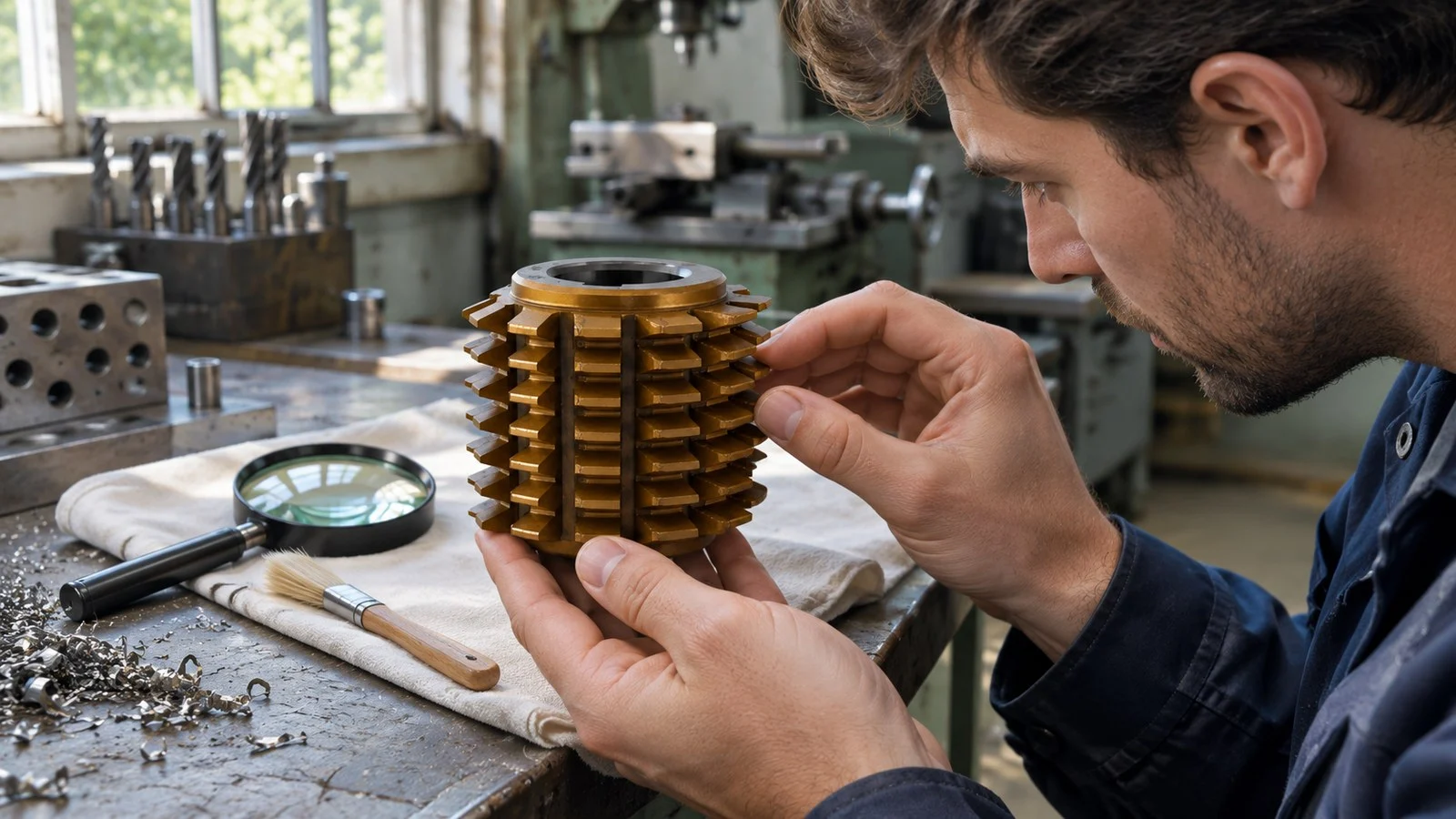
Inspect a gear hob when its cutting edges show wear or damage, then ask a qualified tool-grinding specialist whether resharpening is suitable for that hob. Gear hob resharpening must preserve the tool’s geometry and tooth form as well as restore the edges, because poor grinding can affect hob precision.
When Does a Gear Hob Need Inspection?
A worn cutting edge is a reason to inspect a gear hob before deciding whether to resharpen or replace it. Look for visible wear and chips, and give the specialist the hob’s specifications and job information. The hob maker’s requirements and the specialist’s assessment determine whether reconditioning is suitable.
If you notice an unusual wear pattern, record it along with the workpiece material and the job involved. That information can help the specialist assess the tool. Don’t rely on a sharp-looking edge alone when deciding whether a hob is ready to return to use.
What Should You Send With the Hob?
Give the specialist enough information to identify the tool and understand its job. A useful starting list is:
- Hob type, maker, size and quantity
- Current coating, if known
- Workpiece material
- Any available hob specifications and previous service records
- The wear or damage that prompted inspection
Ask the hob maker or specialist which specifications and inspection results are needed for the decision. If records are incomplete, identify what’s unknown rather than assuming the hob has enough material remaining for another resharpening.
For catalog context, our machining category includes hobbing tools. The individual hob’s documentation still governs the service decision.
What Geometry Should Inspection Verify?
Inspection should check the cutting face geometry and tooth form against the applicable hob specifications. Rake and relief angles, tooth spacing and flute lead are relevant features to discuss with the specialist. Changes in geometry can affect the precision of the hob even when the cutting edges appear sharp.
Before reconditioning, an inspection gives the specialist a basis for assessing wear, chips and the condition of the tooth form. Afterward, ask what was checked and whether the resulting geometry meets the requirements for your hob and job.
Should a Coated Hob Be Recoated?
Grinding a coated hob removes coating from the freshly ground faces. Ask the specialist to assess the coating condition and whether recoating is suitable for the particular tool before authorizing that work.
Reconditioning can involve more than sharpening. Depending on the hob’s condition and specifications, a specialist may also consider reprofiling or coating work. Each operation needs its own assessment; an inspection doesn’t automatically mean the hob can be restored.
What Should You Verify Before Reuse?
Ask for the inspection results before returning the hob to service. In particular, confirm which geometry and tooth-form checks were performed, whether the hob meets its applicable specifications, and what work was completed.
Keep the report with the hob’s records for its next inspection. If the hob maker’s requirements or the specialist’s assessment rule out further resharpening, replace the hob rather than approving another reconditioning cycle.
FAQ
Does a Worn Hob Always Need Resharpening?
No. Wear warrants inspection, but the hob maker’s specifications and a qualified specialist’s assessment determine whether resharpening or replacement is appropriate.
Does Resharpening Change a Hob’s Coating?
Grinding removes coating from the freshly ground faces. Ask the specialist whether recoating is suitable for your hob.
What Should a Hob Inspection Report Cover?
Ask which cutting face geometry and tooth-form features were checked, whether they meet the hob’s applicable specifications, and what reconditioning work was completed.