

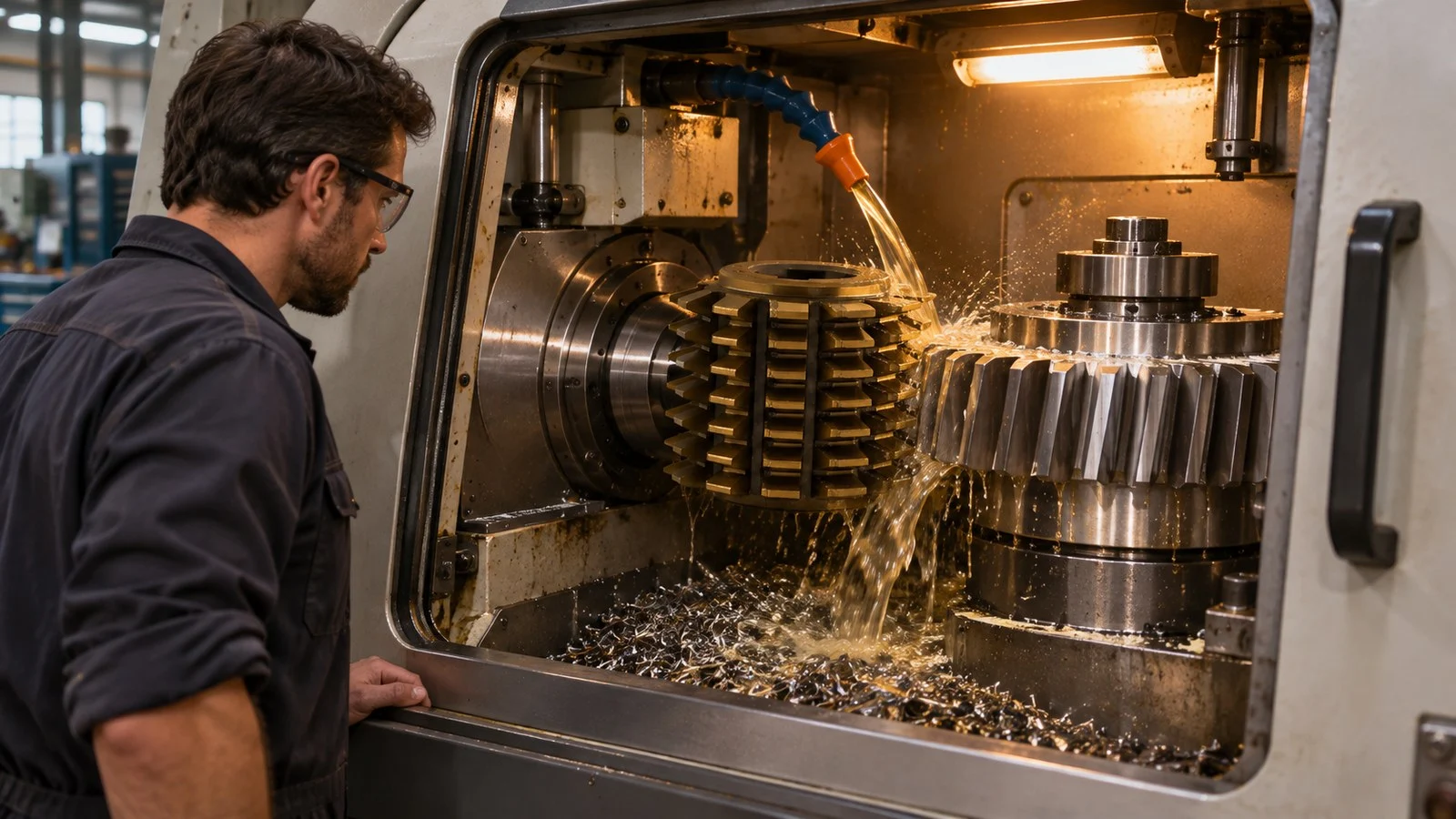
For gear hobbing coolant, use a wet process when the machine and hob are specified for fluid cutting; choose dry hobbing when both are approved for it and the machine has suitable chip, heat and collection provisions. The hob’s material alone doesn’t decide the method: its coating, the workpiece and the machine setup matter too.
Gear Hobbing Coolant: Wet or Dry?
Wet gear hobbing uses a cutting fluid suited to the approved machine and tool setup. Dry hobbing is an option when the hob and machine support cutting without fluid and the machine can handle the resulting chips and heat. Check the workpiece, required gear quality and inspection results before changing either process.
| Process | When to consider it | What to check |
|---|---|---|
| Wet hobbing | The machine and hob are approved for the chosen fluid | Fluid compatibility, delivery, filtration and inspection results |
| Dry hobbing | The machine and hob are approved for dry cutting | Chip evacuation, heat control, collection and inspection results |
A carbide hob isn’t automatically suitable for dry cutting, and an HSS hob isn’t automatically restricted to wet cutting. Follow the instructions for the specific hob and coating. Our Gear hob m2 a20°A is one listing to identify when checking tooling; confirm its cutting conditions before selecting a process.
Choosing a Wet Hobbing Fluid
Start with the fluids permitted by the machine and hob suppliers, then check their compatibility with the workpiece and the fluid system. Use the fluid supplier’s instructions for the selected product, including any applicable concentration and maintenance requirements.
Fluid choice also needs to fit the machine’s filtration and collection arrangements. Before changing a fluid, check compatibility with the existing system and follow the relevant supplier instructions. There’s no universal oil, concentration, pressure or flow setting for every hobbing operation.
Inspect the gears and hob during a trial against the requirements for the job. A fluid choice alone doesn’t guarantee tool life or gear finish.
Preparing for Dry Gear Hobbing
Dry hobbing requires a machine setup designed or approved to manage chips and heat without cutting fluid. Check how chips leave the cutting area and where they’re collected, as well as the machine’s provisions for heat control. Switching off the coolant pump doesn’t create those provisions.
Confirm that the hob’s material and coating are approved for dry use on the intended workpiece. Some carbide hobs have product-specific notes allowing dry cutting or oil cooling; those notes don’t apply to every carbide hob.
Changing the Hobbing Process
Before a wet-to-dry change or a fluid change, review the intended setup with the machine, tooling and fluid suppliers and follow site safety requirements. Record the permitted conditions and the gear inspection criteria before the trial.
Keep the first trial within those conditions, then inspect the gears and hob before deciding whether to continue. Check fluid selection with the relevant suppliers; use their guidance for the operating settings rather than applying a general speed or feed figure to a different setup.
FAQ
Does Gear Hobbing Always Need Coolant?
No. Gear hobbing can run dry when the specific hob and machine support it and the machine has suitable chip, heat and collection provisions.
Can Every Carbide Hob Run Dry?
No. Dry suitability depends on the specific hob, its coating and the intended application. Check the tool instructions before running without fluid.
Which Coolant Is Best for Gear Hobbing?
Choose a fluid approved for the machine, hob and workpiece. The right choice also needs to suit the machine’s delivery, filtration and collection system.