

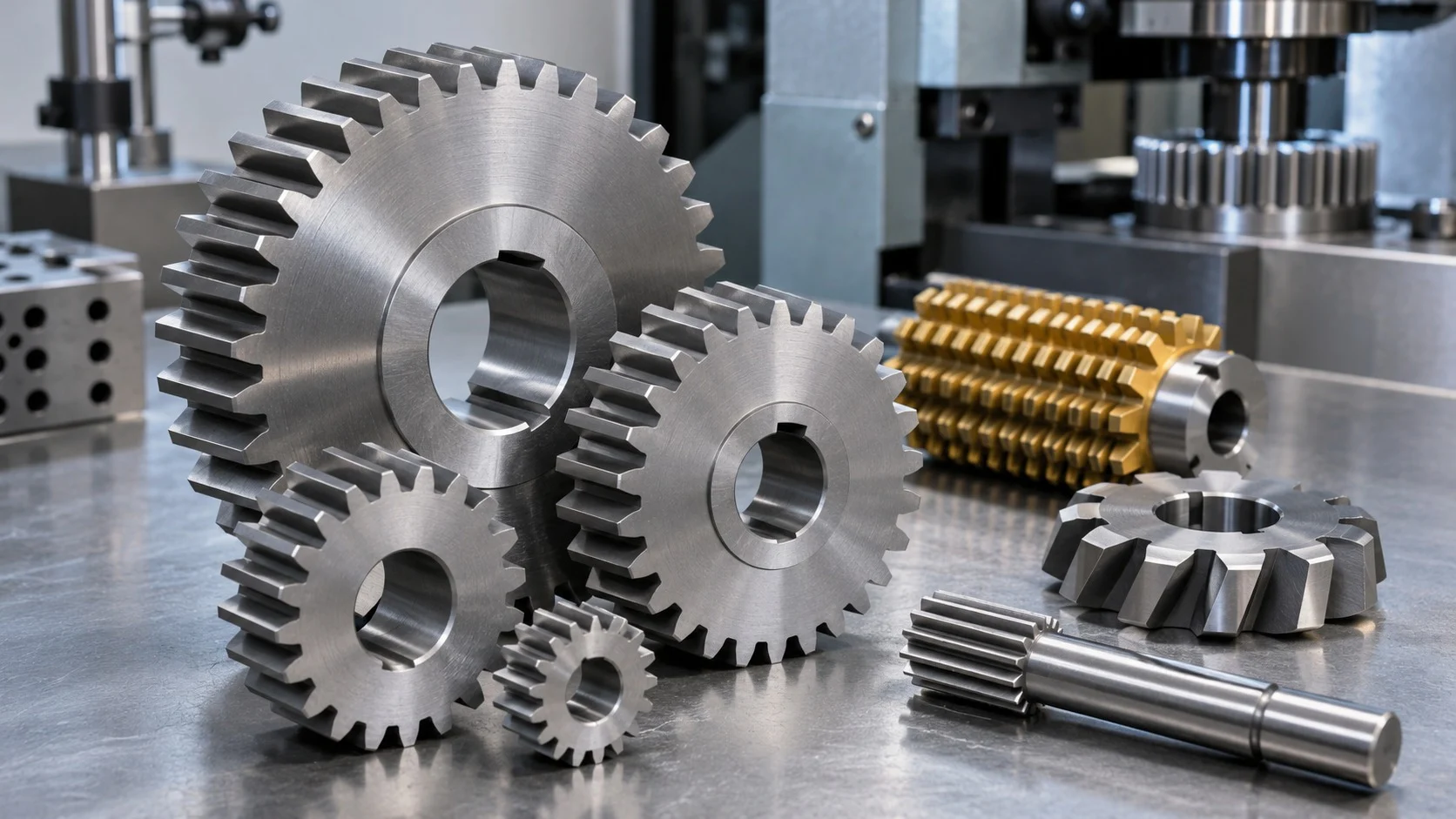
Gear module and diametral pitch both describe tooth size, but they belong to different measurement conventions. Module is metric and relates pitch diameter to tooth count. Diametral pitch is inch-based and expresses teeth per inch of pitch diameter. These values help identify a gear system, but they do not by themselves define a gear or prove that a particular cutter will fit.
Understand Module and Diametral Pitch
For a spur gear in a standard system, module is the pitch diameter in millimeters divided by the number of teeth. A larger module generally means larger teeth. Diametral pitch is the number of teeth divided by pitch diameter in inches; a larger diametral pitch generally means finer teeth.
The numerical relationship is often written as diametral pitch equals 25.4 divided by module, but use that conversion only when module is expressed in millimeters. The factor 25.4 converts millimeters to inches. If the module value uses another unit or the gear system has special conventions, do not apply the formula without checking the specification. Also verify that the values refer to compatible definitions and standards before comparing them.
Why Pitch Is Not a Complete Gear Specification
Module or diametral pitch provides a tooth-size reference, not a complete gear definition. A tool selection also needs the tooth count, pressure angle, profile shift where relevant, face width, helix angle for helical gears, hand, and the specified tolerances and quality requirements. Internal gears, bevel gears, worms, and nonstandard profiles may require additional parameters and a different tool approach.
The mating gear and intended center distance can also affect the design. Two gears with the same module or diametral pitch may have different tooth counts, pressure angles, profiles, or helix angles, so they cannot be assumed to mesh correctly. A cutter identified only by pitch may therefore be the wrong choice even if the nominal tooth size appears to match.
Use the Drawing to Select Gear Tooling
Start with the gear drawing and identify the governing standard and the complete tooth data. Confirm whether the part is external or internal, spur or helical, and whether the tooth form is standard or modified. Then establish the manufacturing process and machine: hobbing, shaping, milling, or another route each has its own tool and setup requirements.
For a gear hob or cutter, check the tool’s stated module or diametral pitch range, pressure angle, form, hand, and intended gear type. Confirm compatibility with the machine, arbor or holder, workholding, and required approach. Use the manufacturer’s tool catalog and application support to verify the exact tool rather than converting one number and ordering from that alone.
Follow the gear machine’s instructions for setup, indexing, tool mounting, and operating limits. Use cutting data recommended for the specific tool and workpiece. Before production, verify the setup and inspect a trial gear using the inspection method specified by the drawing or quality plan.
Confirm the Selection Before Ordering
Provide the tooling supplier with the complete gear drawing or a controlled data sheet. Include all tooth geometry, tolerances, material, heat-treatment condition, machine, and manufacturing route. If any field is missing, ask the design authority to clarify it before the cutter is selected. This avoids relying on module or diametral pitch as a substitute for the full gear definition.
FAQ
Is diametral pitch always 25.4 divided by module?
Only when module is stated in millimeters and both values use compatible gear-system definitions.
Can two gears with the same module mesh?
Not necessarily. They also need compatible tooth geometry, including applicable pressure angle, profile, and other design parameters.
Where can I learn about Wencerl?
Wencerl supplies metal cutting tools. Visit Wencerl for company information and its tooling range.