

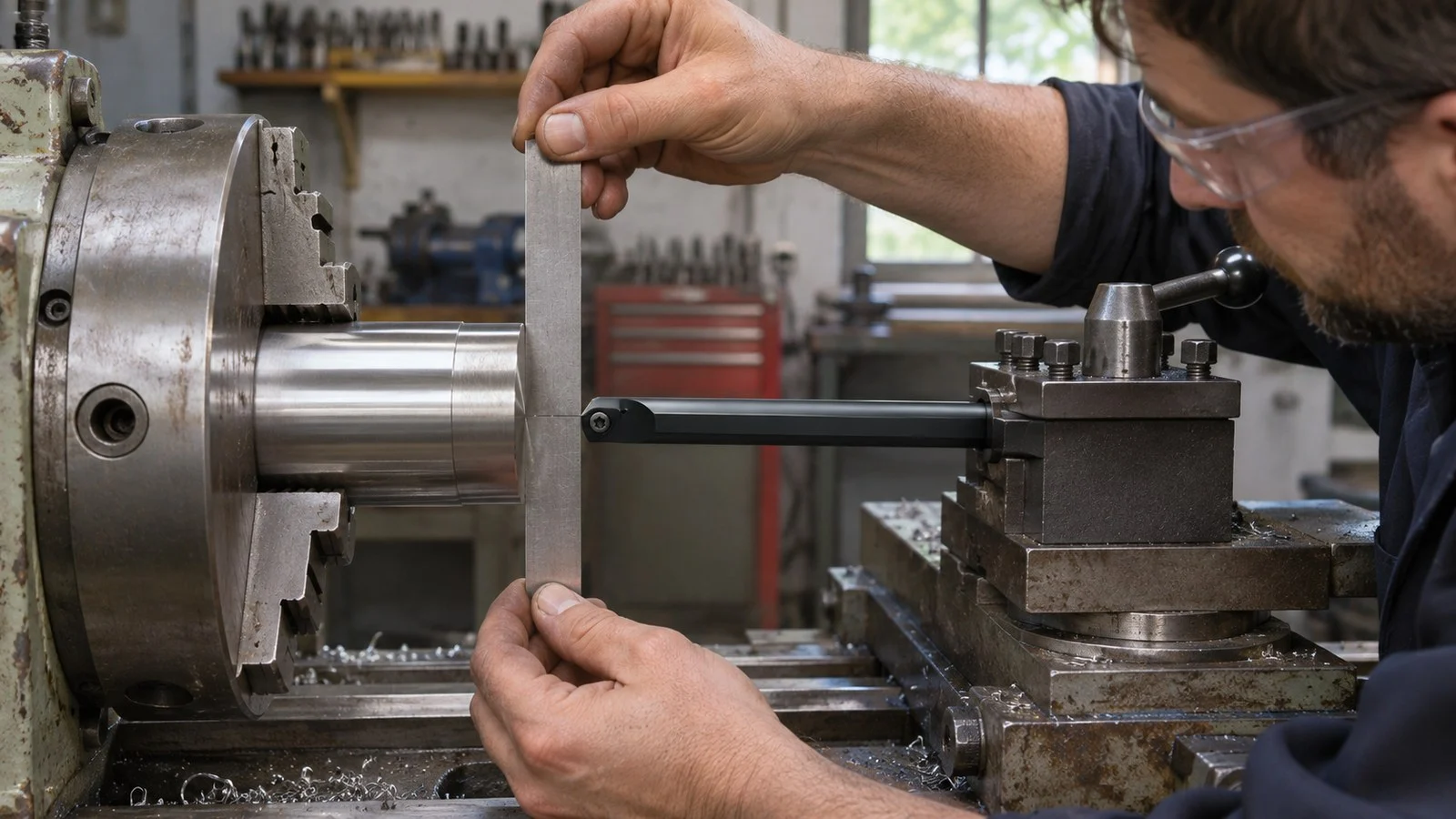
To measure lathe center height for tool setup, compare the cutting edge with a reference at the spindle centerline. On a manual lathe, an aligned tailstock center provides a practical reference; where access or machine design makes that unsuitable, use a height gauge specified for the setup.
How to Measure Lathe Center Height
Lathe tool center height is the position of the cutting edge relative to the spindle’s axis of rotation. With the machine shut down and secured, bring a suitable centerline reference near the tool tip, compare their heights, and adjust the holder using the method intended for that machine.
- Shut down and secure the lathe according to its instructions.
- Place a suitable centerline reference where you can compare it with the cutting edge.
- Check the height of the actual cutting point against the reference.
- Adjust and secure the toolholder, then check the height again.
This measurement concerns the tool tip, not the height of the spindle above the floor or the lathe stand.
Use a Tailstock Center as a Reference
On a manual lathe with a tailstock center known to be aligned with the spindle, bring the center point close to the cutting tip. Compare the two points without touching them, and adjust the cutting edge until it lines up with the tailstock point.
A tailstock center is convenient when you can see both tips clearly. It isn’t a reliable reference if its alignment with the spindle is uncertain. The method also shouldn’t be assumed to apply to every CNC lathe; use the machine’s specified tool-setting procedure.
Adjust the Toolholder Height
The adjustment depends on the holder. On a manual machine with a fixed four-position holder, shims can raise the tool to center height. A height-adjustable quick-change holder uses its adjustment mechanism instead.
Secure the holder after adjustment and compare the tip with the reference again. Check the cutting point itself: the top of the tool shank isn’t necessarily the point that contacts the workpiece. For different turning operations, the machining category provides a place to review turning systems.
Use a Lathe Tool Height Gauge
A manufactured height gauge can make the comparison easier when direct sighting is awkward. Choose one intended for the machine and tool arrangement, and follow that gauge’s setup instructions.
Gauge designs use different references. For example, one Sherline gauge has separate contact lips for its standard and riser tool posts. Another design uses a rod held in a chuck or collet and a level indication. Those procedures aren’t interchangeable, so don’t transfer a contact position or setup step from one gauge to another.
Check the Cutting Edge After Setup
A small nub at the center of a facing cut, an uneven finish, or unexpected tool wear can prompt a height check. Each symptom can have other causes, so use a suitable reference to check the cutting edge before deciding that height is the problem.
Center height is also distinct from machine spindle or turret-axis calibration. Setting a tool tip against a reference doesn’t calibrate those axes. On an internal turning tool, bar overhang is a separate setup consideration; measuring the cutting edge’s height doesn’t establish the right overhang.
Before running the job, check that the holder is secured and the cutting point remains aligned with the chosen reference. If the reference or adjustment method is unclear, follow the machine and toolholder instructions.
FAQ
Is Lathe Center Height Measured From the Floor?
No. For tool setup, center height means the cutting edge’s position relative to the spindle centerline.
Can I Use a Tailstock Center?
Yes, on a manual lathe when the tailstock center is known to align with the spindle. With the machine secured, compare its point with the cutting tip without letting them touch.
Does a Height Gauge Calibrate the Lathe?
No. A tool height gauge helps position the cutting edge relative to its reference; it doesn’t calibrate the spindle or turret axes.