

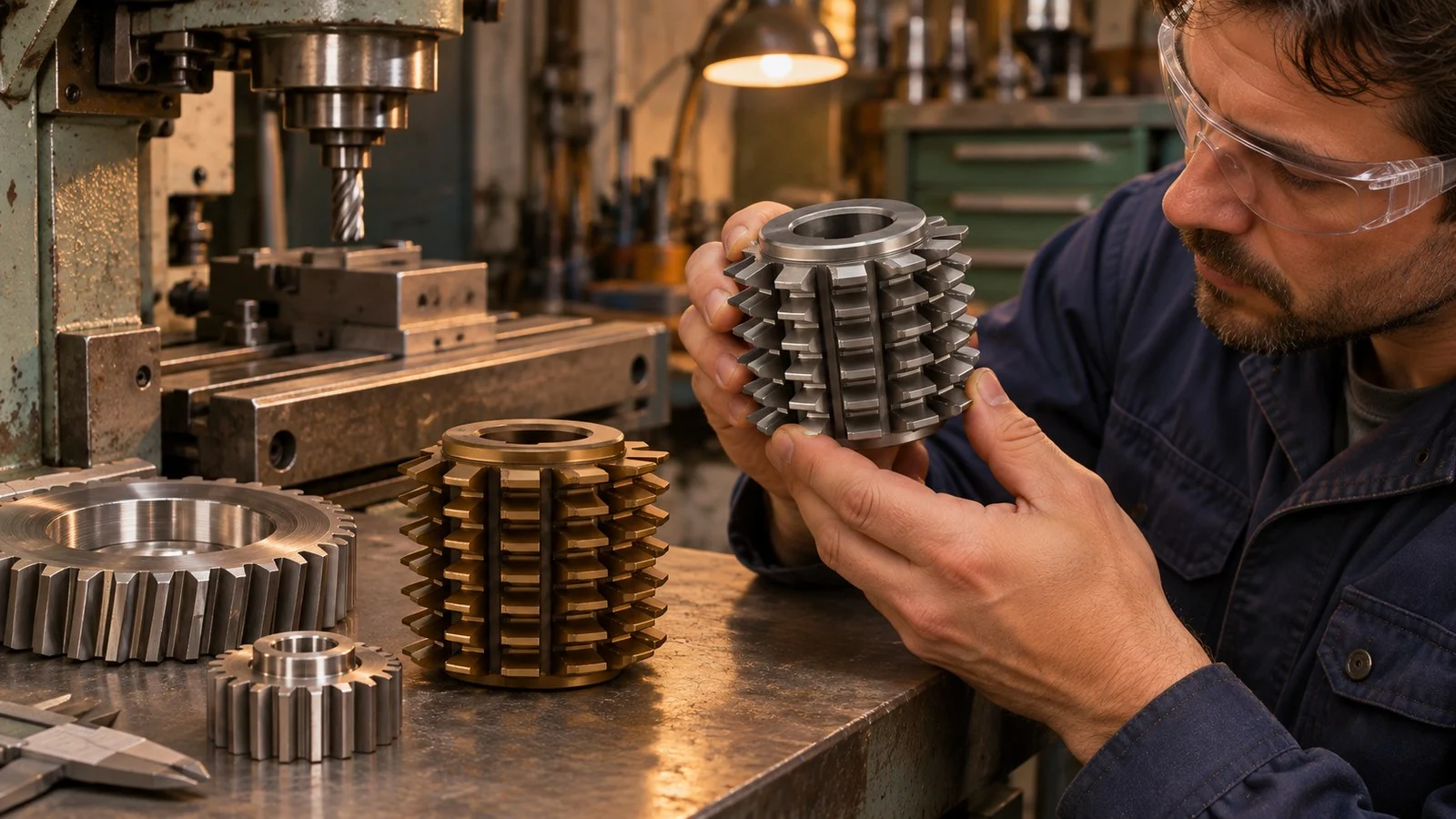
For an HSS vs carbide gear hob decision, HSS is often the practical starting point for smaller batches or setups where toughness matters. Carbide is worth considering for higher-volume work or harder, abrasive materials when the machine and workholding can support a stable cut.
HSS vs Carbide Gear Hob: Key Differences
HSS gear hobs generally offer greater toughness, a lower purchase price and easier regrinding. Carbide gear hobs are harder and can run at higher cutting speeds, but usually cost more upfront and need more careful handling. Actual results depend on the hob grade, workpiece, setup and cutting process.
| Consideration | HSS Gear Hob | Carbide Gear Hob |
|---|---|---|
| Material properties | Tougher | Harder |
| Cutting speed | Generally lower | Can run at higher speeds |
| Initial cost | Generally lower | Generally higher |
| Regrinding | Generally easier | Some can be reground with suitable equipment |
| Common fit | Smaller batches and setups where toughness matters | Higher-volume work and harder or abrasive materials |
| Handling and setup | Toughness can be useful where conditions are less stable | Benefits from stable machine and workholding conditions; needs careful handling |
Both materials come in multiple grades, so the label alone won’t tell you how a particular hob will perform.
HSS Gear Hobs: Strengths and Uses
An HSS gear hob uses high-speed steel as its cutting material. Its toughness and generally lower initial cost make it a useful choice when you need a hob for small or medium batches, particularly on softer to medium-hardness materials.
HSS is generally easier to regrind than carbide, which can help spread the purchase cost over the hob’s usable life. Its main trade-off is cutting speed: a carbide hob may be a better production choice when a stable setup and higher volume make faster cutting valuable.
Carbide Gear Hobs: Strengths and Uses
A carbide gear hob uses carbide as its cutting material. Its hardness makes it a candidate for harder or abrasive workpieces, and its potential for higher cutting speeds can be valuable in high-volume production.
Carbide generally costs more upfront and needs more careful handling. Before choosing it, assess the stability of the machine and workholding as well as the workpiece and cutting process. Some carbide hobs can be reground using diamond wheels and precise equipment; check with the hob manufacturer about the actual tool, its geometry and suitable reconditioning.
Choosing an HSS or Carbide Gear Hob
Choose HSS if:
- You’re producing small or medium batches and want a lower initial tool cost.
- Toughness is a priority for the job.
- Easier access to regrinding matters to your tool budget.
Choose carbide if:
- You’re machining a harder or abrasive material.
- Higher-volume production makes the potential for higher cutting speed valuable.
- Your machine and workholding provide stable cutting conditions.
Compare cost per gear using the purchase price, expected parts per cutting edge, available resharpenings, regrinding costs and downtime for tool changes. If the hob will be recoated after regrinding, include that cost in the comparison too.
When reviewing a specific tool, check its substrate, geometry and reconditioning options before ordering. Our Gear hob m2 a20°A listing is one place to start a product inquiry; confirm its material and suitability for your job.
FAQ
Is Carbide Always Better Than HSS?
No. Carbide can suit high-volume work and harder or abrasive materials, while HSS can be more practical for smaller batches or when toughness and lower initial cost matter.
Can Carbide Gear Hobs Be Reground?
Some can, using diamond grinding wheels and precise equipment. Ask the hob manufacturer whether the specific tool and its geometry are suitable for reconditioning.
Does Recoating Change the Cost Comparison?
It can. Include any planned recoating cost alongside regrinding, tool changes and the number of gears produced when comparing cost per gear.