

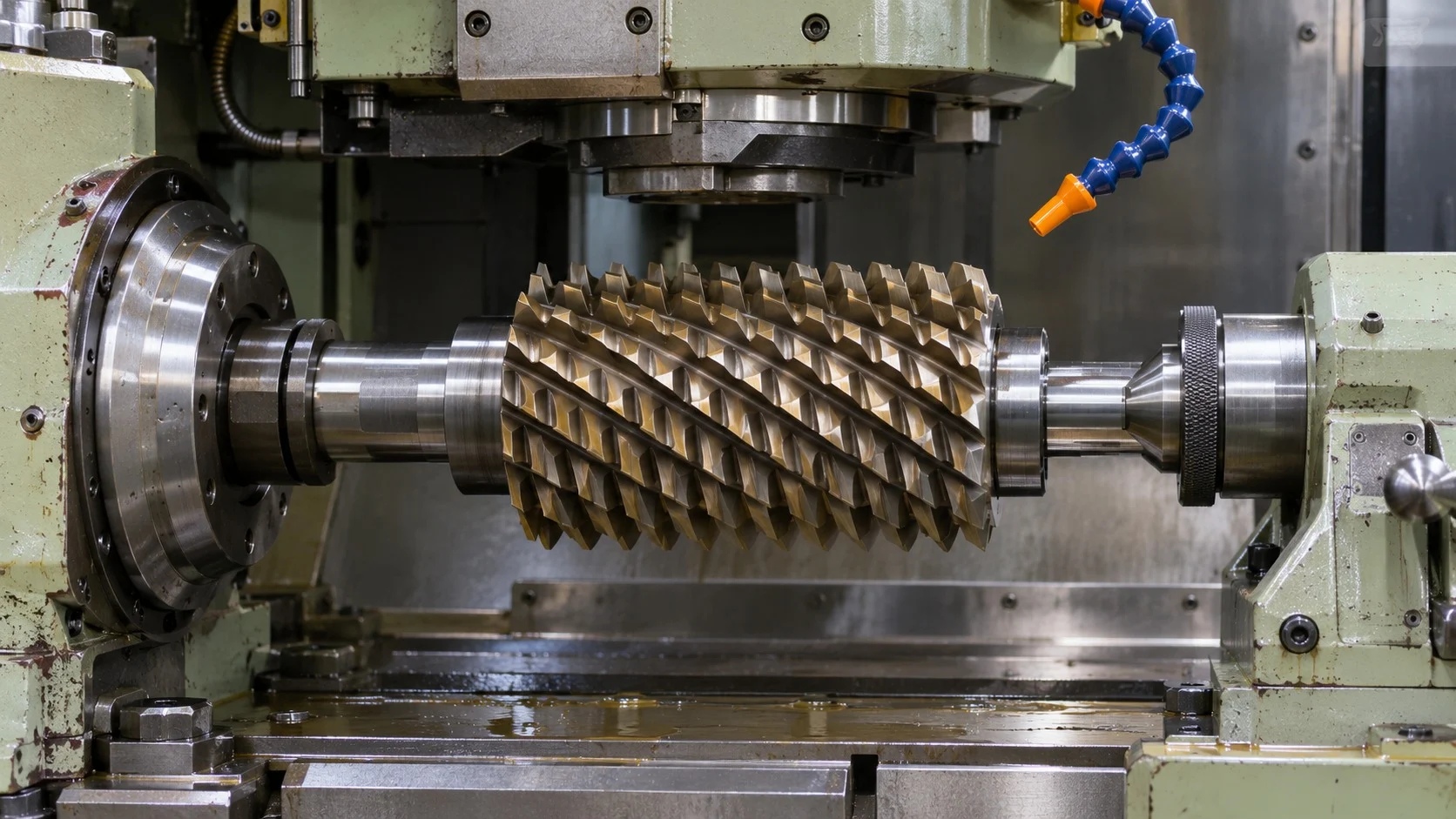
Gear hob shifting is the controlled movement of a hob along its axis between cuts or during a planned production sequence. When the tool and machine are designed for shifting, the movement can bring a different section of the hob into the cutting zone. This may help spread use along the cutting length, but it is not a universal tool-life fix and must follow the toolmaker’s setup instructions.
Why Shift a Hob?
During hobbing, the active cutting edges experience load, heat and chip contact. If the same axial section remains engaged over many parts, wear can concentrate in that zone. A planned shift changes the axial position used for cutting, allowing another section to participate, where the hob design and operation permit it.
The expected benefit depends on the hob geometry, the tooth width being cut, the machine’s shifting capability and the process conditions. Shifting cannot correct a wrong hob specification, poor alignment, unsuitable cutting data, unstable workholding or a material variation. Diagnose those issues before changing axial position.
Confirm That the Hob and Machine Support Shifting
Start with the hob drawing, machine manual and supplier guidance. Confirm the allowed shift direction, available travel, positioning method and any restrictions tied to the hob design. Some operations may use a discrete shift between batches; others may have a documented automatic strategy. Do not assume a machine can shift safely just because an axis is available.
Check how the shift affects the relationship between the hob, workpiece face width and cutting zone. Ensure sufficient active cutting length remains engaged and that the tool will not run into a shoulder, fixture or other obstruction. The correct shift increment and sequence are application-specific; obtain them from the toolmaker or approved process documentation rather than selecting an arbitrary distance.
Plan and Record the Shift Sequence
A useful plan identifies the starting axial position, each approved shift position, the parts or cycles assigned to each position, and the inspection checks used to confirm quality. Record the hob’s usage and sharpening history alongside the shift location. This gives production and maintenance staff a consistent way to see which sections have been used.
Before a shift, follow the machine’s safe setup procedure. Stop the machine as directed, isolate or secure motion where required, and use the approved positioning controls. Keep guards and interlocks effective. Inspect the hob for damage or abnormal wear and verify that the shifted position is correctly set before restarting. Never reach into a running machine or bypass a safety device to make an adjustment.
Monitor Quality and Wear Across Positions
Inspect gears produced at each planned position using the drawing’s requirements and the established measurement method. Look for changes in tooth form, size, surface finish, burrs or other indicators relevant to the part. If quality changes after a shift, investigate positioning, alignment, hob condition and machine setup before continuing.
Compare wear across the hob’s axial zones during scheduled inspection or reconditioning. Even distribution is not guaranteed: cutting conditions, entry and exit behavior, stock allowance and geometry can create uneven loading. A shifting plan should be reviewed when the workpiece, machine, hob design or production method changes.
Use tool-specific cutting parameters and maintenance recommendations from the manufacturer. Wencerl’s metal cutting tool information can support a discussion about a hob and shifting approach suited to a particular machine and gear. Provide the hob details, gear drawing, machine model and observed wear pattern so the recommendation addresses the actual process.
FAQ
Does axial shifting always extend hob life?
No. It can distribute use when the hob and machine support the practice, but results depend on the application and process conditions.
How far should the hob be shifted?
Use the approved increment and sequence for the specific hob and machine. There is no single value appropriate to every setup.
Can shifting compensate for poor gear quality?
It should not be used as a substitute for diagnosing quality problems. Check the specification, alignment, cutting conditions, workholding and tool condition.