

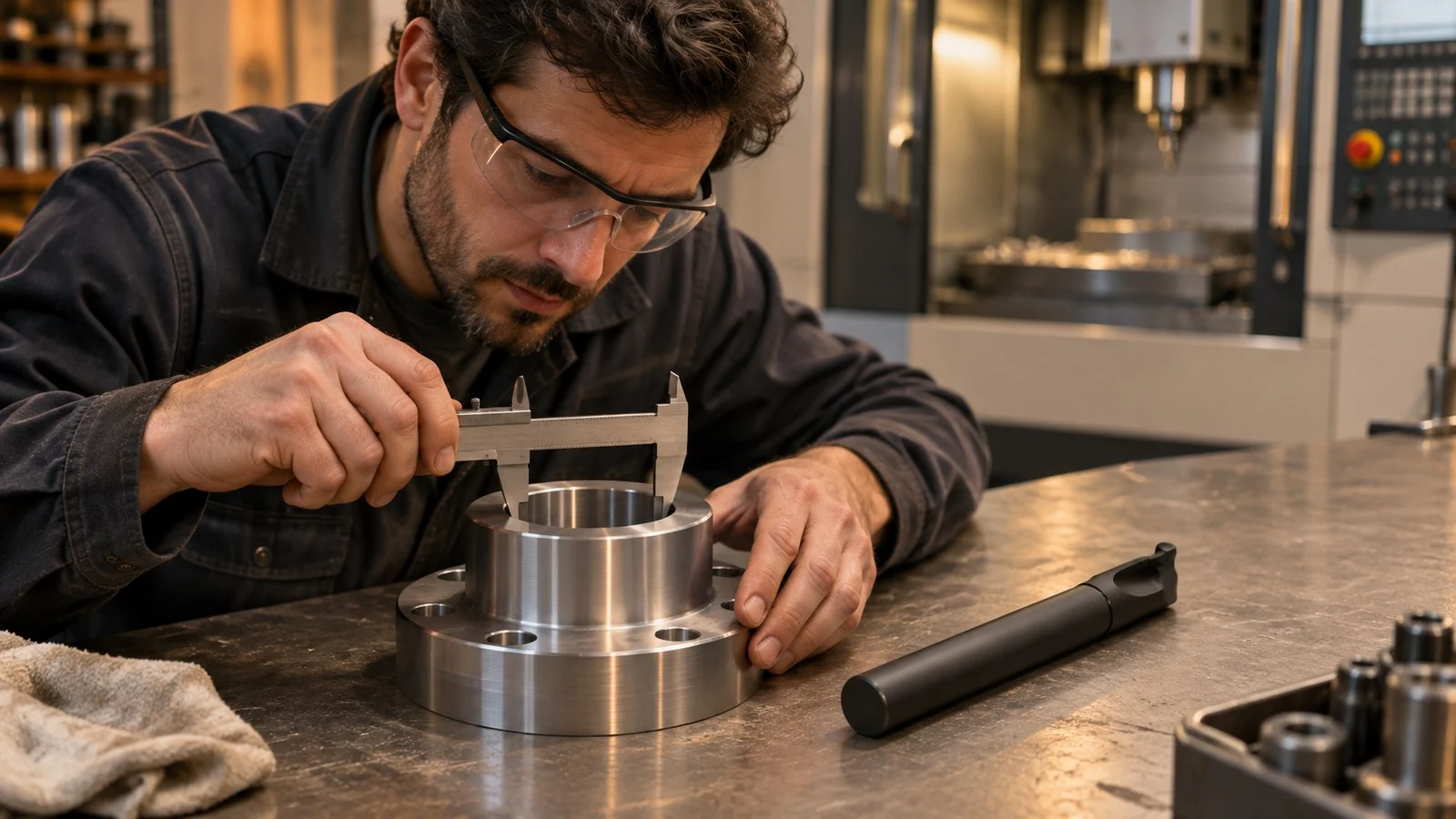
Rough boring suits an existing hole that needs substantial enlargement or preparation before its final cut. Finish boring suits the cut that brings a prepared hole to its specified diameter and surface requirements; in rough boring vs finish boring, the starting hole and the drawing determine whether you need one stage, both, or another tooling sequence.
Rough Boring vs Finish Boring: Key Differences
Rough boring enlarges and prepares an existing hole, leaving material for a later operation when needed. Finish boring targets the final diameter and surface requirements. The choice depends on the starting hole, the material to remove, and the finished bore requirements; neither operation alone guarantees accuracy.
| Consideration | Rough Boring | Finish Boring |
|---|---|---|
| Main purpose | Enlarge and prepare an existing hole | Bring a prepared hole to final size and surface requirements |
| Material removal | Removes material before the final cut | Removes the remaining allowance for the final cut |
| Starting condition | Suited to a hole needing further preparation | Suited to a hole prepared for finishing |
| Main planning concern | Leave a suitable condition and allowance for the next operation | Meet the drawing requirements without making the bore oversized |
Rough Boring: Pros, Cons and Uses
Rough boring enlarges an existing hole and can prepare it for a final cut. It suits work where the starting bore leaves more material than the planned finishing operation can accommodate.
The advantage is a separate opportunity to prepare the bore before targeting final size. The tradeoff is another operation when a separate roughing stage is used. Check the starting diameter, location and variation in remaining stock before deciding how much preparation the hole needs.
For a roughing tool option, our Double Edge Rough Boring Tool is listed in the catalog. Check its specifications and compatibility against your setup before selecting it.
Finish Boring: Pros, Cons and Uses
Finish boring is the operation aimed at the final bore diameter and surface requirements. It suits a hole that has already been prepared with an allowance appropriate for the finishing tool and planned cuts.
Its strength is control of the final cut to meet the drawing requirements. Its drawback is that an oversized bore can make the part unusable. The final result depends on the complete process, including the tool, setup, material and measurement, so select the finishing conditions for the job rather than assuming a tool alone will deliver the required tolerance.
Planning Roughing and Finishing Together
Use a roughing stage before finish boring when the starting hole needs more preparation than the finishing tool is intended to handle. A separate roughing stage isn’t necessary for every job; the starting condition and chosen tooling determine the sequence.
Define the finish allowance clearly. Allowance on diameter is the difference between the current bore diameter and the final diameter. Radial depth is the amount removed from the bore wall on one side; for a centered enlargement, it is half the change in diameter. Check which convention the tool instructions and program use.
The finishing allowance also relates to the insert nose radius and the number of finish cuts planned. Use the tool manufacturer’s guidance for the actual application instead of applying one allowance to every bore.
Choosing a Boring Sequence
Choose rough boring when:
- The existing hole needs further enlargement or preparation before the final cut.
- The starting diameter, location or stock variation calls for a planned preparation stage.
- The intended finishing tool isn’t suited to removing all the remaining material in the planned cuts.
Choose finish boring when:
- The hole is prepared for the final diameter and surface requirements.
- The remaining allowance suits the finishing tool and the number of cuts planned.
- You can check the finished bore against the drawing requirements.
Before setting the sequence, check the bore depth relative to its diameter, chip evacuation and machine rigidity alongside the starting hole and finish requirements. Confirm the measurement method before the final cut, and use the actual tool’s instructions when setting the allowance and cutting conditions.
FAQ
Can You Finish Bore Without Rough Boring?
Yes. If the existing hole is suitably prepared and its remaining allowance fits the finishing tool and planned cuts, a separate roughing stage may not be needed.
Is Boring Allowance Radial or Diametral?
It can be specified either way, so check the instructions. For a centered enlargement, radial depth is half the change in bore diameter.
What Determines Final Bore Accuracy?
Final bore accuracy depends on the whole process, including the tool, setup, material and measurement. The starting hole and the sequence used to prepare it also matter.