

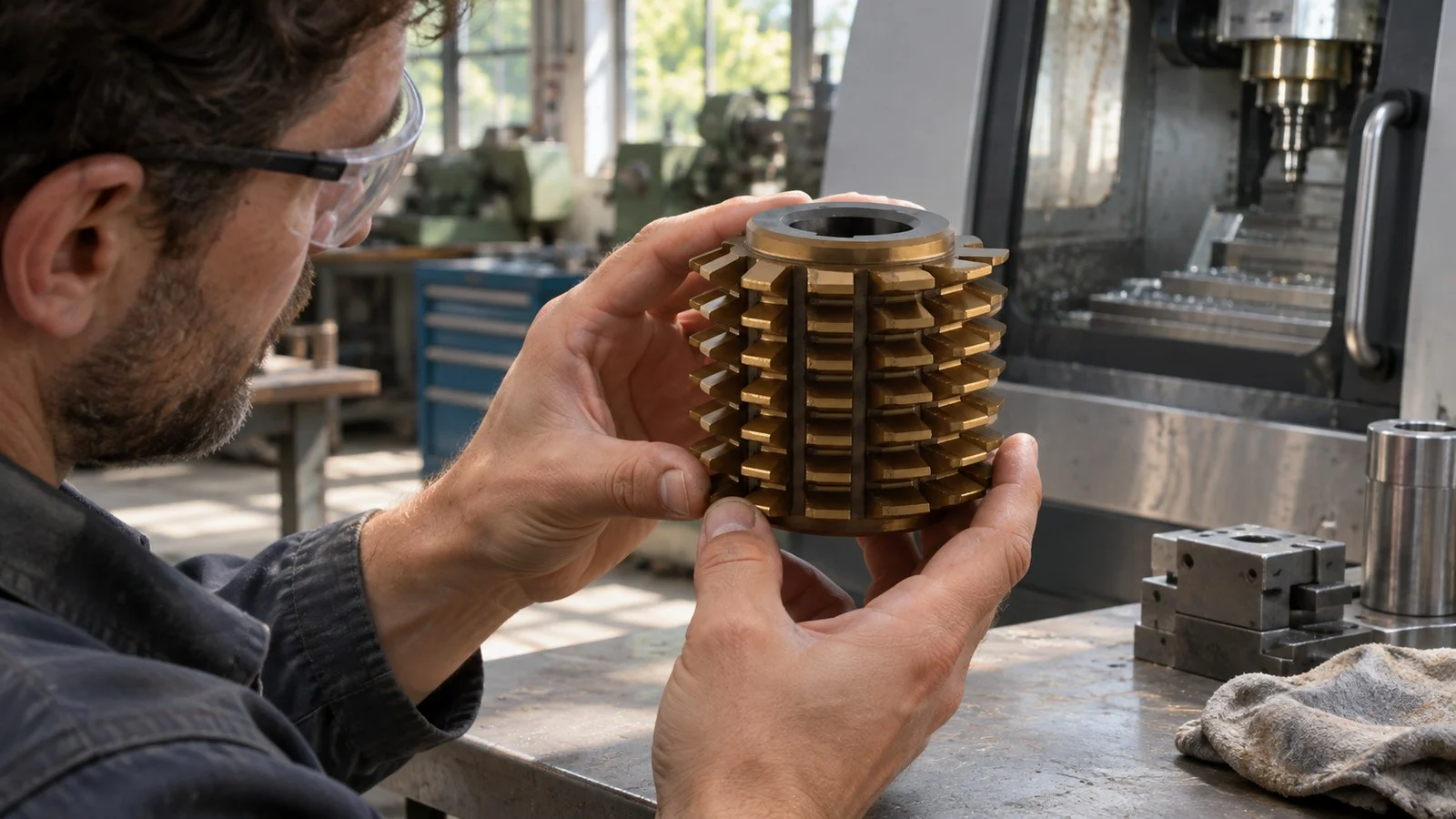
In the single start vs multi start gear hob decision, a single-start hob is a useful choice when generated tooth profile is the priority. A multi-start hob is worth considering when production rate matters and the hob, machine and gear requirements support the required quality.
Single Start vs Multi Start: Key Differences
A single-start gear hob has one helical thread; a multi-start hob has more than one. Increasing the number of starts may improve production efficiency, but it can also increase polygonal profile error. The result depends on the complete hob geometry, machine rigidity and synchronization, and the gear’s tolerances.
| Selection factor | Single-start hob | Multi-start hob |
|---|---|---|
| Helical threads | One | More than one |
| Production rate | A starting choice when profile quality takes priority | May offer higher production efficiency |
| Generated profile | Often selected when accuracy is a priority | Potential for greater polygonal error must be assessed |
| Suitable work | Jobs with demanding profile requirements | Jobs where higher output is valuable and required quality can be achieved |
A start is a helical thread on the hob. Gashes, also called flutes, are a separate geometry feature that creates cutting edges and provides chip space. Counting gashes doesn’t tell you how many starts a hob has.
Single-Start Gear Hob: Pros and Cons
A single-start gear hob has one helical thread. It is a practical starting point when the generated tooth profile and the job’s tolerances are more important than maximizing output.
The trade-off is that a single-start hob may offer less production efficiency than a suitable multi-start design. Even so, one start alone doesn’t guarantee the required gear quality: the hob geometry, machine and finished gear requirements still need to be considered together.
Multi-Start Gear Hob: Pros and Cons
A multi-start gear hob has more than one helical thread. It can be a good choice when improving production rate matters and the process can meet the required gear quality.
The trade-off is a potential increase in polygonal error in the generated profile. That doesn’t mean every multi-start hob produces a less accurate gear than every single-start hob, or that a multi-start hob can’t be used for finishing. The result depends on the actual tool and process.
Which Gear Hob Should You Choose?
Choose a single-start hob if:
- Generated profile quality is the main selection priority.
- The job’s tolerances make a profile-focused starting point appropriate.
- Potential production gains are less important than meeting the specified gear quality.
Choose a multi-start hob if:
- Higher production efficiency is valuable for the job.
- The proposed hob and process can meet the gear’s manufacturing tolerances.
- The machine has suitable synchronization, rigidity and strength for the application.
Before ordering, check the gear drawing and tolerances against the hob and machine manufacturer’s instructions. Confirm the hob’s start count, gash count, accuracy grade and machine compatibility. You can review our Gear hob m2 a20°A listing and confirm those details for your application.
FAQ
What Is a Gear Hob Start?
A gear hob start is a helical thread on the hob. A single-start hob has one such thread, while a multi-start hob has more than one.
Are Starts and Gashes the Same?
No. Starts are helical threads; gashes or flutes are separate features that form cutting edges and provide space for chips.
Can a Multi-Start Hob Finish Gears?
A multi-start hob can be considered for finishing if the hob, machine and process achieve the required gear quality and job-specific tolerances. Confirm the selection against the gear design and manufacturer instructions.