

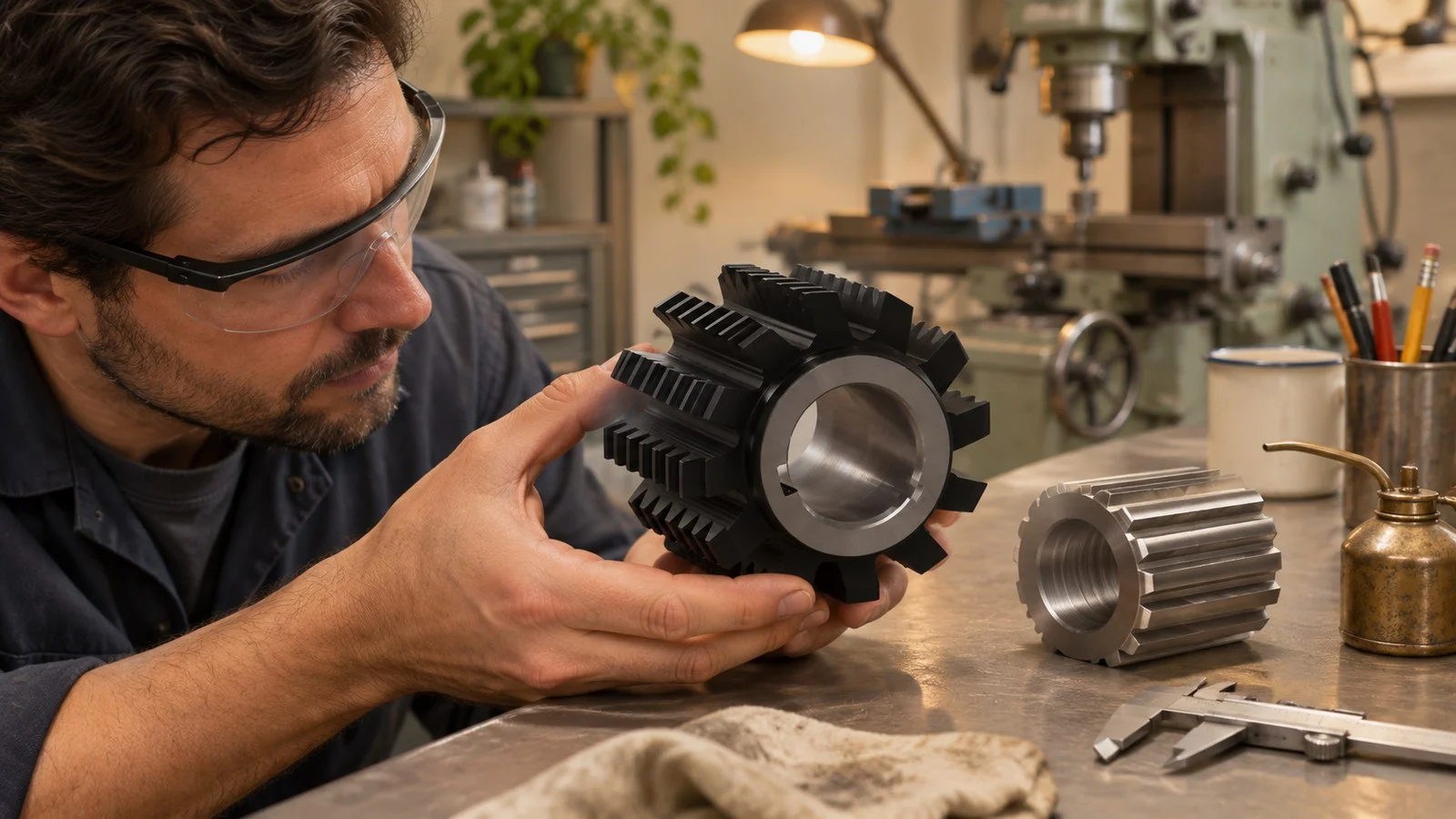
For most external spline jobs, hobbing is a strong choice when the machine can synchronize the hob and workpiece and has enough clearance for the cutter. In spline hobbing vs milling, form milling is worth considering when you have a suitable milling setup and a cutter that matches the required spline profile.
Spline Hobbing vs Milling: Key Differences
Spline hobbing generates an external spline profile through synchronized rotation of the hob and workpiece. Form milling uses a cutter shaped to reproduce the required profile, with the workpiece indexed between cuts. The choice depends on cutter clearance, machine capability, spline geometry, and the number of parts you need to make.
| Consideration | Spline Hobbing | Form Milling |
|---|---|---|
| Profile formation | Generated by the coordinated motion of the hob and workpiece | Formed by a cutter whose profile matches the required shape |
| Machine motion | Requires synchronized hob and workpiece rotation | Uses indexed cuts around the workpiece |
| Access | Requires clearance for the hob and its sweepout | Cutter access must suit the part geometry and machine |
| Batch decision | Consider setup and production needs together | Consider setup and production needs together |
| Profile selection | Hob must suit the spline drawing | Cutter must match the spline drawing |
Spline Hobbing: Pros, Cons and Uses
Spline hobbing generates the tooth profile as the hob and workpiece rotate in synchronization. It offers a useful balance of productivity and flexibility for external splines when the machine and tooling suit the job. It deserves consideration for repeat production, where setup can be evaluated across the batch.
The part’s geometry can limit access. An adjacent shoulder may leave too little room for the hob to sweep out after the cut. Check the actual drawing and machine setup before selecting the method; where hob clearance is insufficient, shaping may be a better option.
For a hob example, our catalog includes the Involute Spline Hob m1 a30° M42 AA (2). Confirm the tool details against the spline drawing and machine requirements before choosing it.
Form Milling: Pros, Cons and Uses
Form milling cuts the external spline with a tool shaped for the required profile. The workpiece is indexed between cuts so the cutter can form the spaces around it. A suitable milling setup can make form milling a practical choice when you already have the machine capability and a matching cutter.
Cutter selection is central to the result: the required tooth profile and root geometry must match the drawing. Access and machine capability still need checking, and the setup and cutting time should be assessed for the batch rather than assumed from the method alone.
Our catalog also lists a Rectangular Spline Milling Cutter. A rectangular spline cutter and an involute spline hob address different profiles; select tooling against the drawing rather than treating the two as interchangeable.
Choosing an External Spline Method
Choose hobbing if:
- Your machine can synchronize the hob and workpiece.
- The hob has enough clearance around the spline and any adjacent shoulder.
- The hob matches the required profile and the setup suits the batch.
Choose form milling if:
- Your milling machine can index the workpiece and access the required cuts.
- You have a form cutter that matches the spline profile and root requirements.
- The setup and cutting plan suit the number of parts.
Before committing either method, check the spline drawing, available cutter access, machine capability and batch size together. A cutter that matches the tooth shape still needs a workable path into and out of the cut.
FAQ
Can You Hob Splines Near a Shoulder?
You can only hob them if the part and setup provide sufficient cutter clearance and sweepout. If the shoulder prevents that movement, consider another method such as shaping.
Does Form Milling Generate a Spline Profile?
A form cutter reproduces its own shape in the workpiece. The cutter must match the spline profile and root requirements on the drawing.
Is Hobbing Always Faster Than Milling?
No. Compare the setup and cutting plan for the actual part, machine and batch before deciding which method better suits the job.