

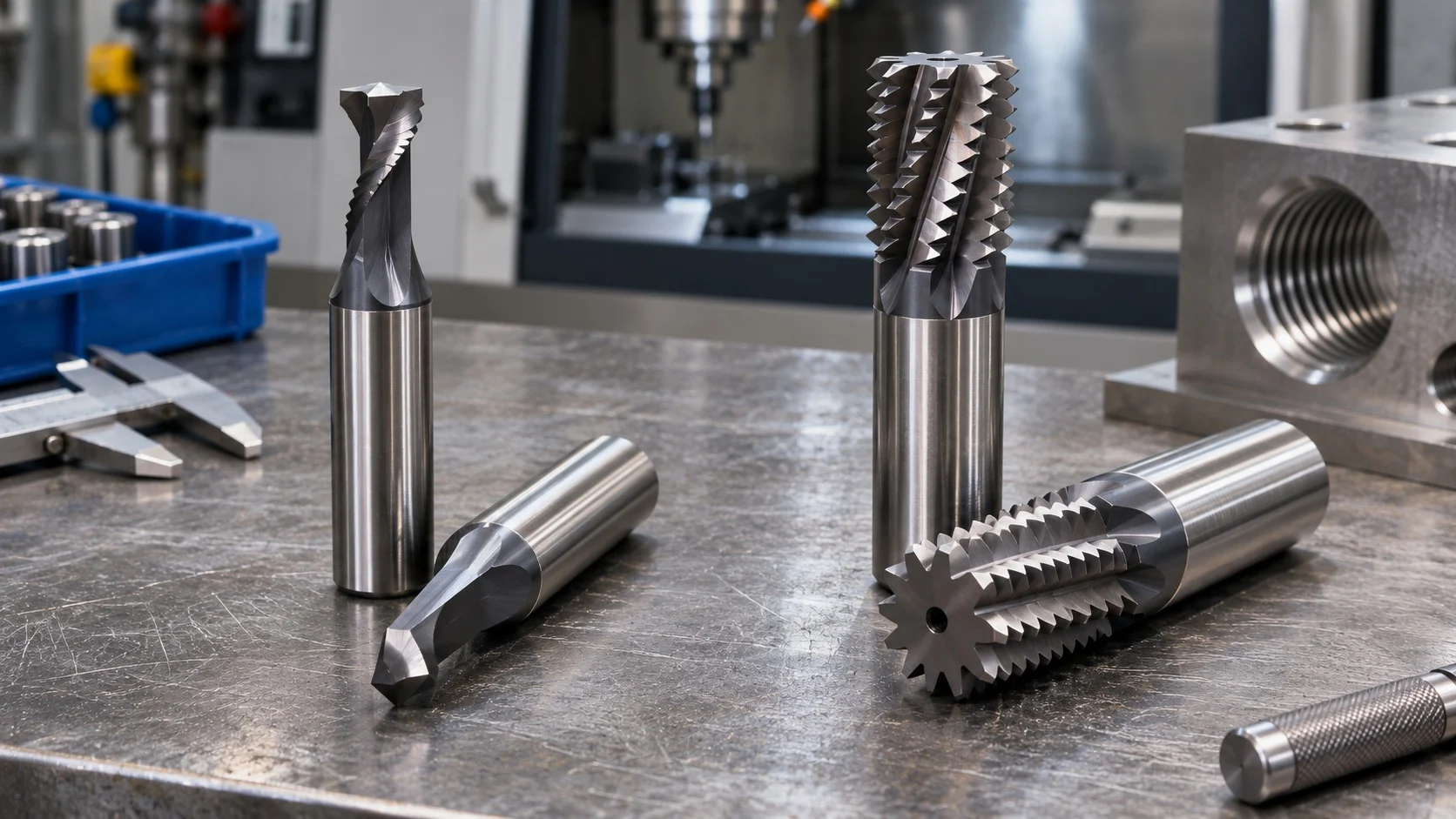
Choose a single-form thread mill when progressive cutting along the thread length suits the job. Choose a multi-form cutter when its rated cutting length covers the thread and fewer helical revolutions benefit production. Both choices depend on compatible geometry, tool reach, and setup stability.
Single-Form vs. Multi-Form at a Glance
| Selection Factor | Single-Form | Multi-Form |
|---|---|---|
| Cutting Geometry | One axial row of thread-form geometry, potentially with multiple flutes | Multiple axial rows with fixed pitch spacing |
| Thread-Length Coverage | Progresses along the length through repeated helical orbits | Can cover the required length in one orbit when rated cutting length permits |
| Engagement | One axial row cuts at a time | Multiple rows can cut simultaneously, increasing cutting force |
| Size Coverage | Multiple sizes within manufacturer-rated limits | Multiple sizes within manufacturer-rated limits and compatible row spacing |
How a Single-Form Thread Mill Works
A single-form thread mill has one axial row of thread-form geometry. It can have multiple flutes around its circumference. The programmed helical path carries that geometry along the required thread length.
For either cutter style, each complete helical orbit advances axially by one thread lead. Lead equals pitch only for a single-start thread. Confirm the thread’s start count when programming axial movement.
Progressive length coverage generally requires more helical revolutions than a multi-form cutter covering the same thread length. The trade-off is limited simultaneous axial engagement. Reach, overhang, and rigidity still affect suitability.
This style can fit short runs and varying thread lengths when the selected model’s geometry and reach cover the work. Its manufacturer-rated profile, pitch, and diameter ranges determine which thread sizes it can produce.
How a Multi-Form Thread Mill Works
A multi-form thread mill has several axial rows of thread-form geometry with fixed pitch spacing. Those rows generate multiple portions of the thread during the helical movement.
A single orbit can cover the required thread length only when the cutter’s rated cutting length covers it and its geometry matches the thread. Radial stepovers may still be needed to reach final thread depth or control engagement.
Longer axial contact can raise cutting force. The potential reduction in helical revolutions therefore needs to be weighed against rigidity, tool reach, and the planned cutting passes. These engagement and pass-selection considerations are discussed in the verified guide. Sandvik Coromant Thread Milling Guide, pp. 13, 35, 38, and 45
Multi-form cutters can suit recurring jobs with compatible geometry and stable cutting conditions. They can also produce multiple thread diameters within manufacturer-rated limits. Fixed row spacing makes pitch compatibility essential.
Check the Program and Prove the Choice
Start with thread diameter, pitch, lead, profile, tolerance, handedness, and required length. Check tool diameter, usable reach, cutting length, and clearance against the drawing and fixture. For blind holes, include bottom clearance and approach and retract movements.
Use cutting data and coolant guidance for the actual cutter and material. Simulate the complete path, including radial passes, then follow the shop’s proving procedure. Inspect the first part with an appropriate thread gauge or measurement method across the required thread length.
Compare complete cycles, including entry, exit, and radial stepovers. Record cutting conditions and inspection results so the choice reflects the actual job. Follow the machine and tool manufacturers’ safety instructions during proving and production.
For our catalog options, review the thread milling cutter range and confirm each candidate’s documented application limits. Wencerl · Our Thread Milling Cutter Range
Choose single-form when progressive length coverage and limited axial engagement best fit the work. Choose multi-form when its fixed pitch spacing and rated cutting length match the thread, and the proven process benefits from fewer helical revolutions.
FAQ
Is a Multi-Form Thread Mill Always Faster?
Actual cycle time depends on cutting length, radial passes, approach and retract movements, and usable cutting conditions. Compare the complete programs on the intended job.
Can Either Style Cut Several Thread Diameters?
Yes, when the manufacturer-rated profile, pitch, and diameter ranges permit. Check the selected model’s documentation, including the fixed pitch spacing of multi-form cutters.
Which Type Is Better for a Blind Hole?
Choose according to usable reach, cutting length, bottom clearance, and chip evacuation. Verify that the complete programmed motion fits within the available space.